Do you really need a clean room for hard‑drive data recovery?
You’ve probably seen labs promote multimillion‑dollar "clean rooms" and hazmat‑style suits. Looks impressive, but it isn't required for safe, successful recoveries. What matters is a validated laminar‑flow workspace and technicians who know what they're doing.
The Myth
You need a $2,000,000 clean room for data recovery
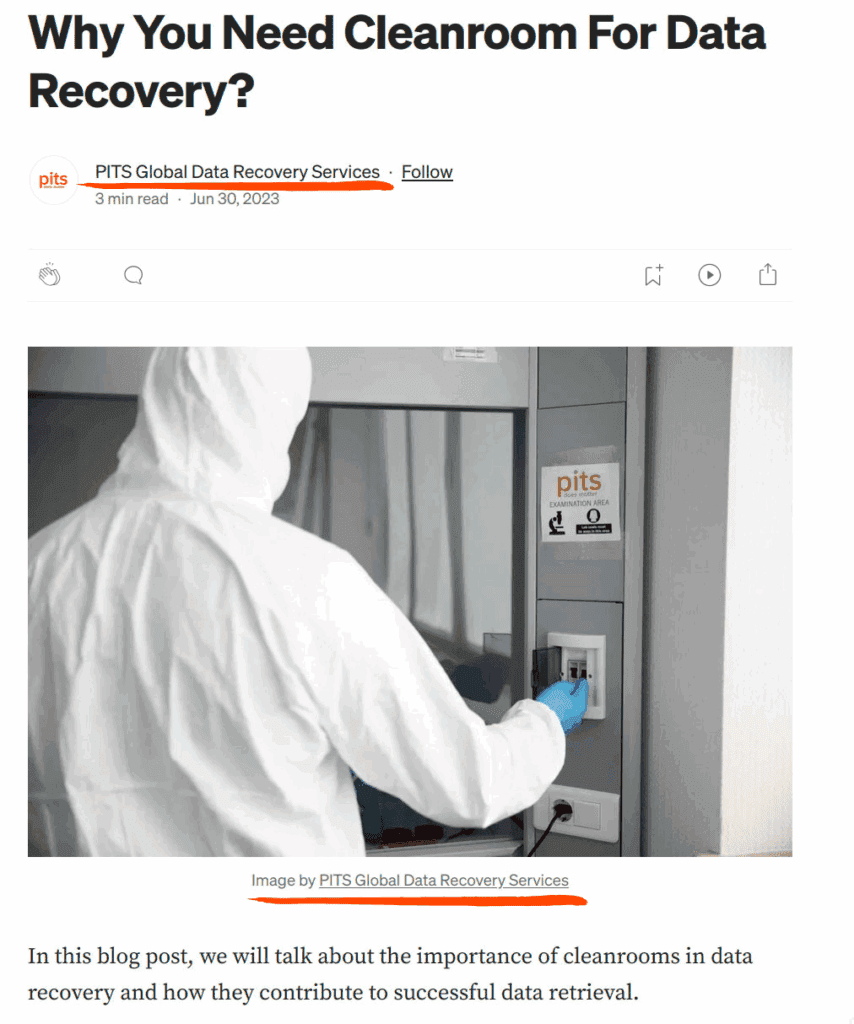
Some companies showcase "ISO‑certified clean rooms" and full body suits to imply it's necessary, or that it makes them inherently better. That might make sense if your drive were covered in biohazards, but it isn't.
The Truth
You need a properly filtered workspace
Opening a hard drive in your living room is a bad idea. What actually matters:
- ✓Filtered air that removes ultrafine particles
- ✓Consistent laminar airflow that flushes contaminants
- ✓An environment validated with professional instrumentation (below detection at 0.02 µm)
- ✓Engineers who know what they’re doing
At Rossmann Repair Group, we do all four.
A top‑of‑the‑line workspace costs less than a big‑screen TV
So these companies claim you need a 2 million dollar clean room: watch what we're going to do with professional equipment that costs less than 1% that.
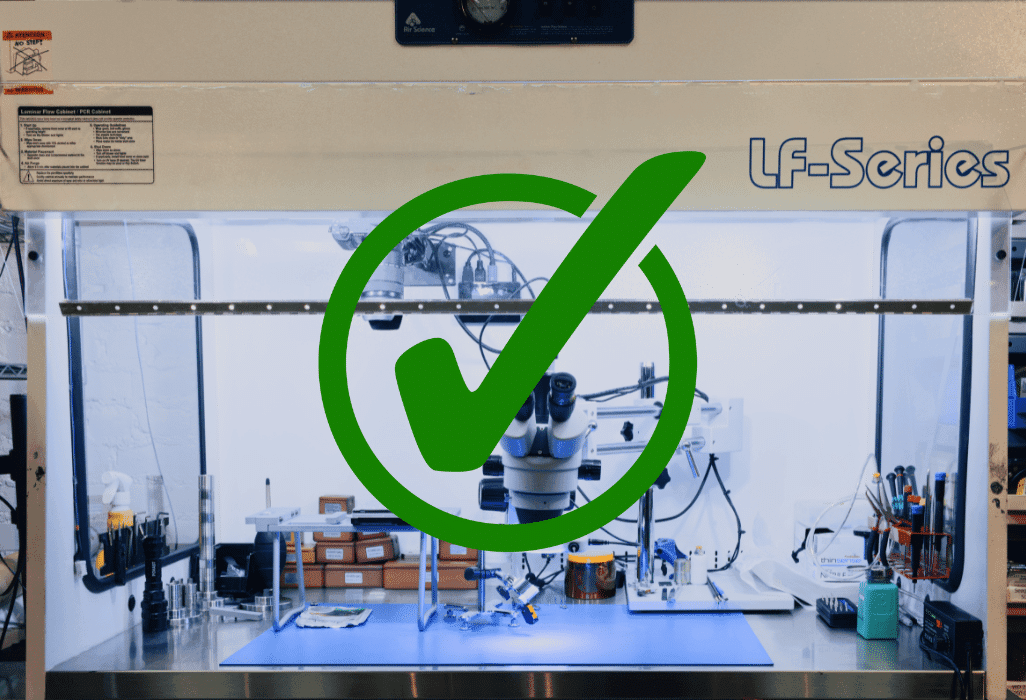
This is a Purair VLF‑48 laminar‑flow bench. It costs less than an 83″ OLED TV. Let’s put it to work and see how it performs.
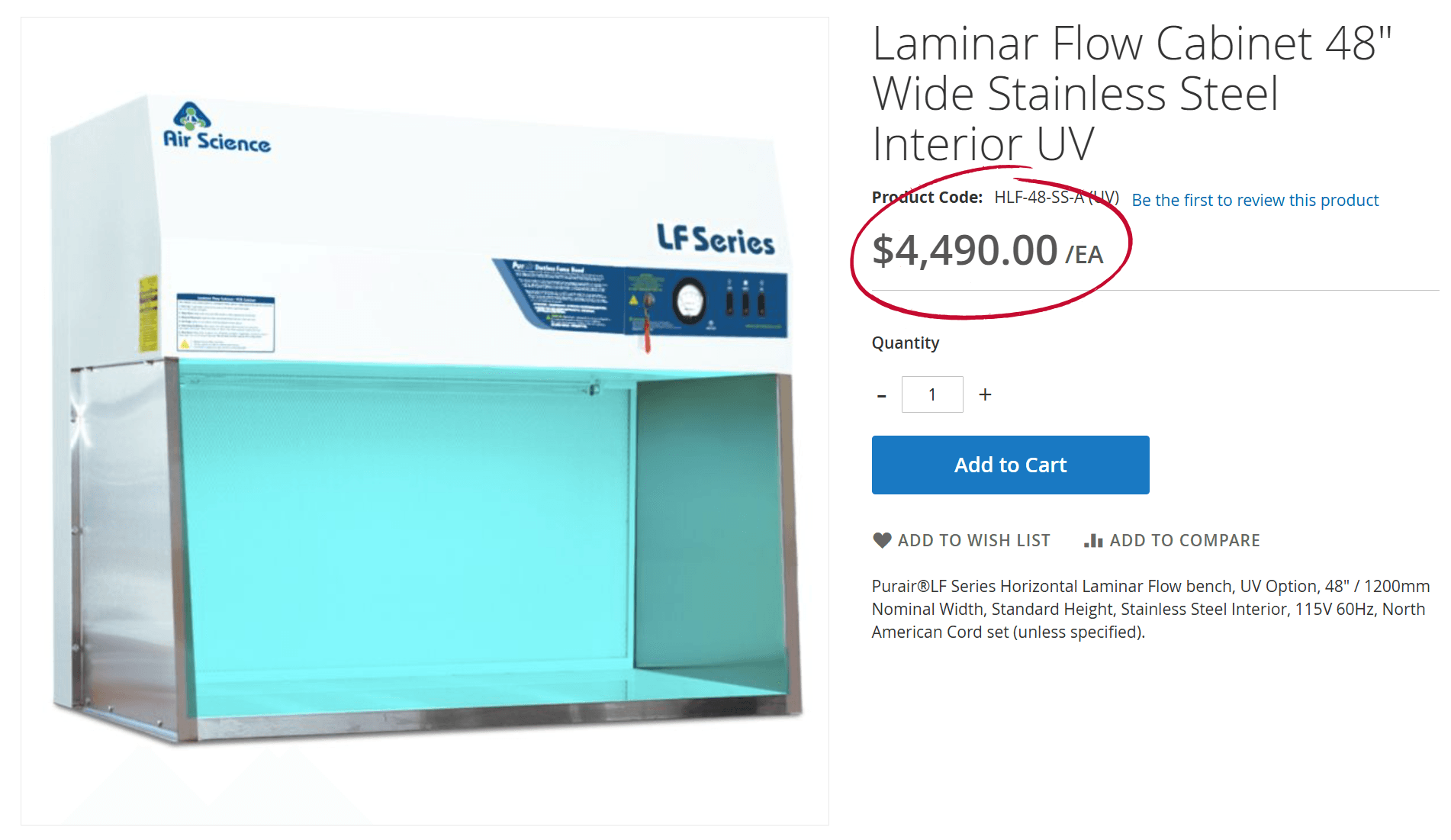

The Purair VLF‑48 is a professional laminar‑flow hood for protecting drives from airborne particulates while open. It uses ULPA filtration (99.999% at 0.1-0.3 µm) and creates a vertical curtain of filtered air that continually flushes contaminants away from the work area. In other words, we saved roughly $1,995,510 and still do the same job, without marketing theater.
How we validated the setup
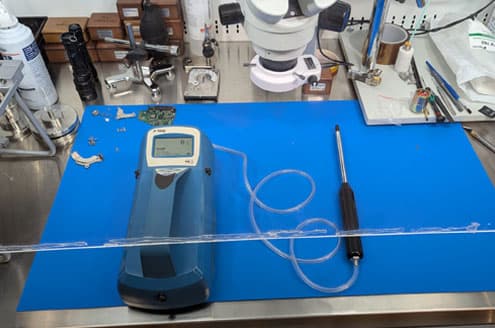
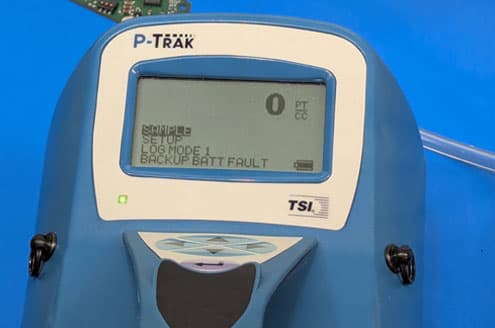
We measured with a professional ultrafine particle counter (TSI P‑Trak 8525), capable of detecting down to 0.02 µm. After ~60 seconds of bench runtime, the counter read 0 at 0.02 µm, i.e., below the instrument's detection limit.
How small is 0.02 µm, anyway?
The individual dust specks you see floating around your room are typically 10-50 µm across, about 500× larger in diameter. Because volume scales with the cube of radius, one visible speck is ~100 million times the volume of a 0.02 µm particle. Inside the bench, we're below detection at 0.02 µm in under a minute.
Spacesuits are comical & unnecessary
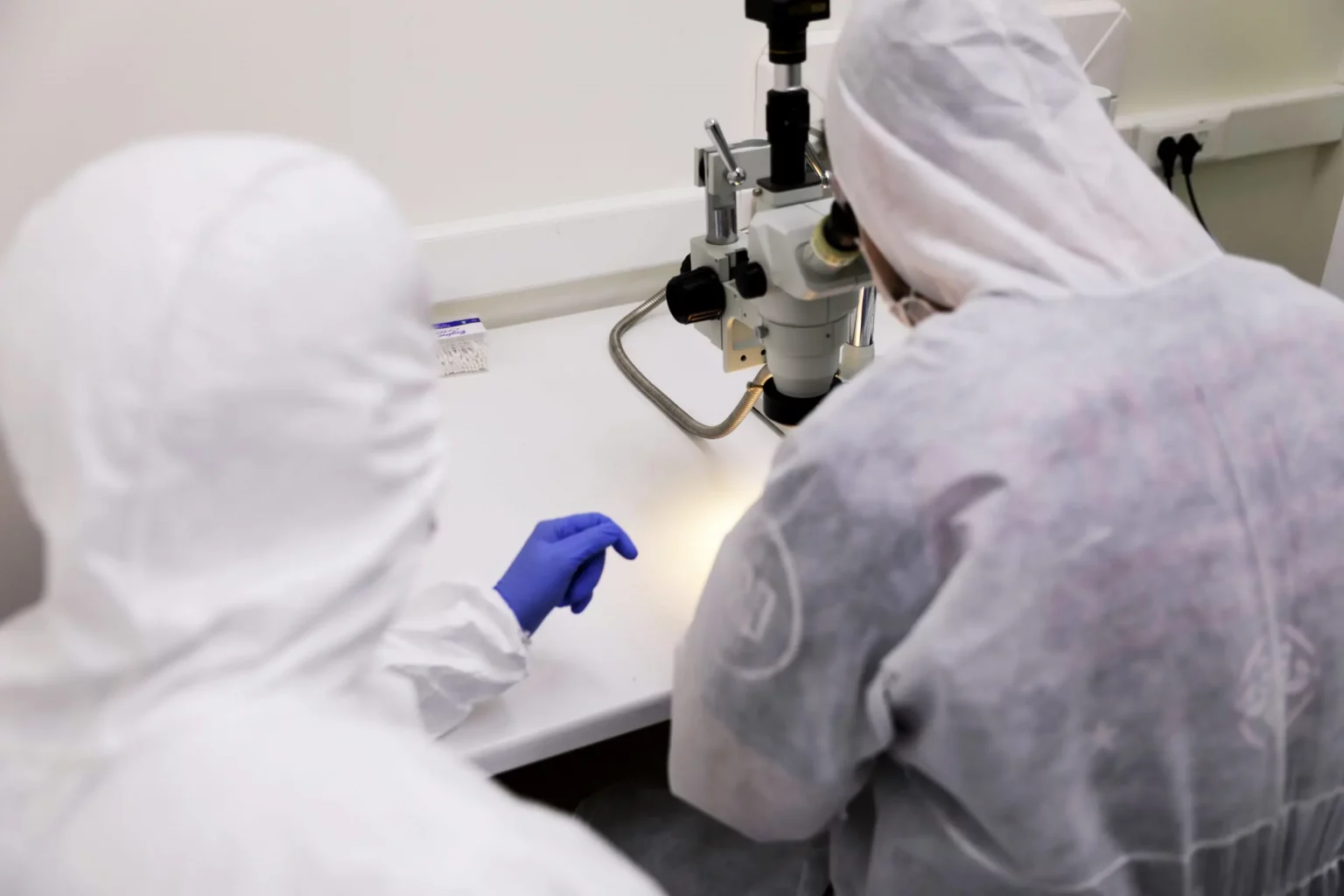
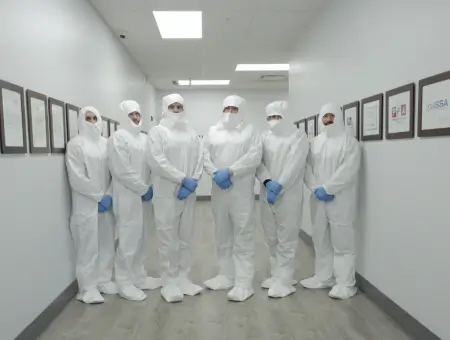
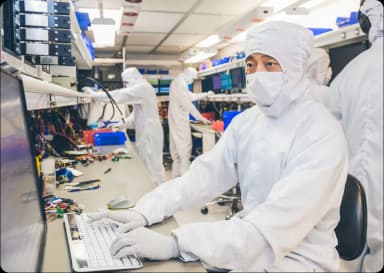
What you’re actually paying for
Those sponsored results at the top of Google cost serious money.

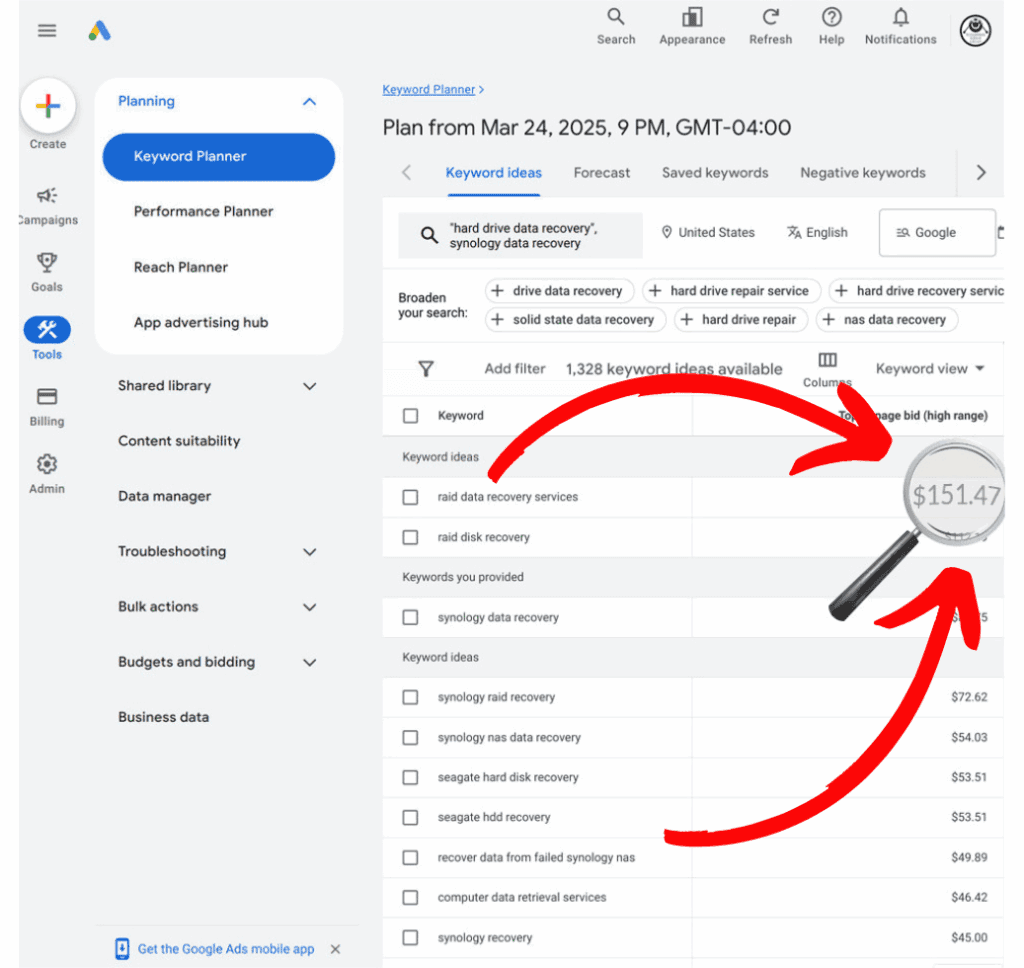
If your issue only needs a cheap part or a quick fix, a shop paying these ad costs can't quote you reasonably. They'd lose money before they start. That's why we don't spend on this marketing, and why our quotes make sense.
Don’t pay for marketing. Pay for results.
What you pay us goes into your recovery, not into ads. We spend $0 on affiliate commissions or paid placements.

Watch us do REAL data recovery using our tools!
Curious how we work? Here's a full walkthrough video from our bench!